Reiki and Christianity: Do they Align?
The Story Behind Reiki
Reiki is a Japanese method that promotes relaxation, stress reduction, and healing. “Rei” means spiritual wisdom and “Ki” means life force energy. Reiki is administered by a gentle “laying on of hands.” The technique was codified by a Japanese spiritual master named Ushui, who reportedly climbed Mt. Kurama Yama to fast and mediate and be willing to die as his Zen master had suggested. He was seeking a special spiritual state. On that mountain, he had a powerful light enter his mind through the top of his head, as is he had been struck by lightning. He fell down, unconscious. When he woke, he felt something profound had happened to him, and in his joy, he ran down the mountain only to trip over a tree trunk, injuring his toe. Hopping up and down on the other foot, he grabbed his wounded foot in his hands and felt healing energy flow from his hands. The pain in his toe suddenly subsided and Ushui realized that he had been given the gift of healing. His healing powers were further tested in 1923, when the great Kanto earthquake and tsunami did extensive damage to Tokyo. Many people were sick and wounded. Ushui, now known for his healing abilities would have one hand on one person, a foot on someone else, another hand one someone else in need. Many people were healed. Ushui became a Sensei who trained others to practice reiki. The actual ability to practice reiki was given by “attunements,” passed from the Master to the student, rather than a curriculum to be studied academically. One notable student was Dr. Chujiro Hiyashi, a Japanese military doctor who began to use codified positions over various body organs to heal specific illnesses.
Philosophy of Reiki
Reiki works with the energy field around the body. In the past, energy healing was considered to be a hoax, superstition or imaginary by Westerners. With more recent research in metaphysics, scientists now believe that all atoms, molecules and consequently the human body is composed of energy. Reiki is one of many practices that increases the flow of energy in and out of the six chakras which align with the endocrine system. Blocked chakras stop this energy flow, making the body more prone to illness.
The Reiki practitioner senses subtle energy inconsistencies and applies Reiki to help the body back into balance to heal itself. Reiki practitioners do not believe that they themselves are producing this healing power, but that they are a mere conduit to a Higher Power. As a healing tool, Reiki can only be used for the good, and can never be harmful.
Is Reiki a Religion?
Reiki is not a religion, but a practice that used by people of all faiths and by those that do not identify with any particular faith. Reiki might be compared to the practice of prayer, a tool that is used by people of diverse faiths and culture. In this article, I am addressing questions that might arise from the Christian worldview, without presuming that Reiki is a Christian (or non-Christian practice). However, I do ascribe to the view that Reiki can be adapted to Christianity, in the same way that eastern meditation can be a tool for Christians to deepen their faith.
What is a Reiki session like?
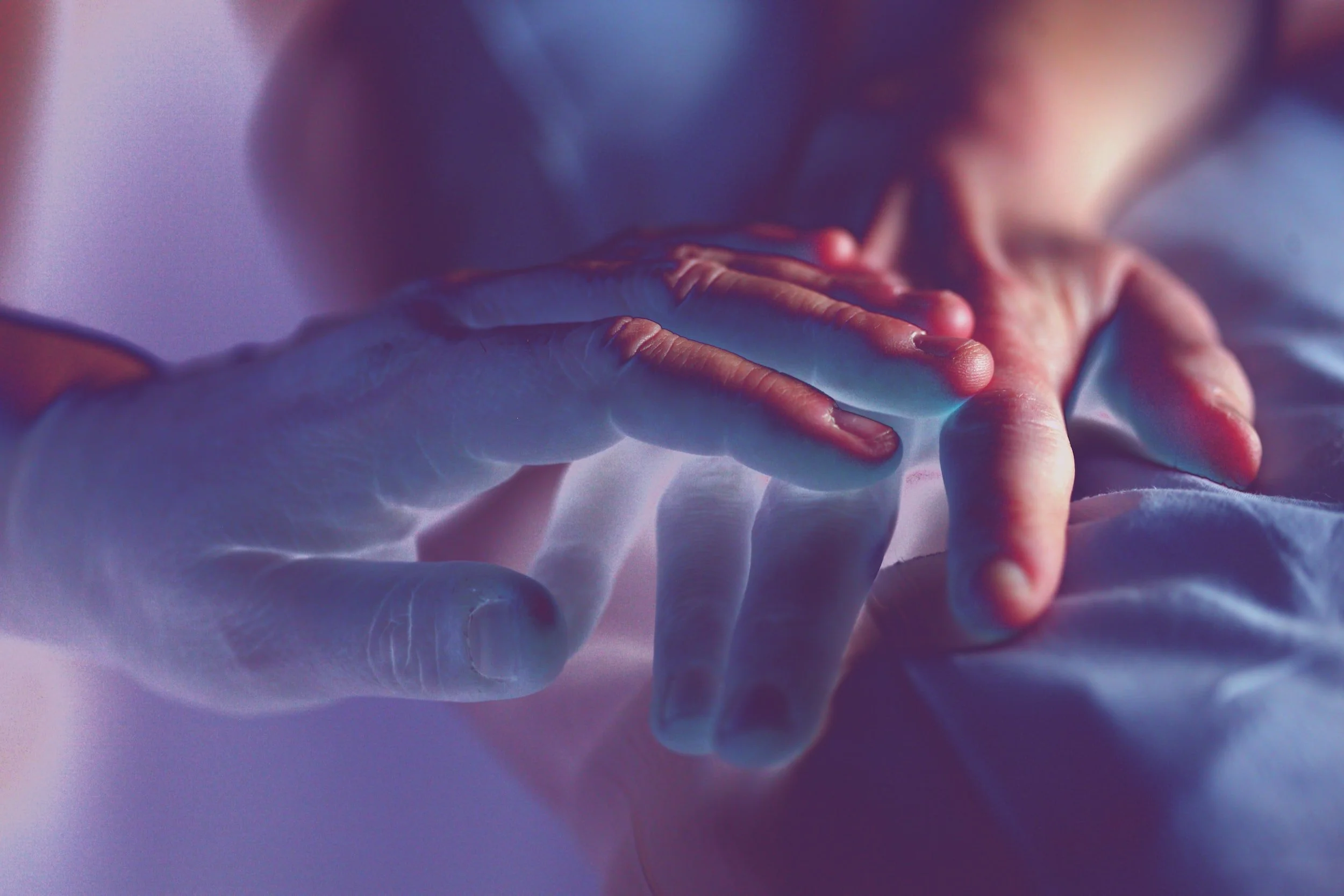
Reiki styles can vary, but basically, one sits or lies down in a comfortable, relaxed position with eyes closed. The Reiki practitioner will lay their hand over your body to try and pick up any unusual sensations in their hands. They may never touch your body at all, or they may gently place their hands, in non-invasive position on your body for several minutes at a time. You may feel a warmth emanating from their hands. Many people find a reiki session to be an emotional release, or you may experience some insights about your emotions or spiritual life, or other issues. Some Reiki practitioners use crystals, as these are also known to have powerful healing properties. Others may use symbols, which they will draw over your body to help get the energy flowing and provide emotional and physical benefits.
Reiki and Christianity
Does Reiki and Christianity align? As a Jesus follower myself, this was something that I needed to reconcile as I began my study of Reiki. I knew that many people since Jesus’/ time had claimed to be healers, but I had never experienced it myself. The church that I attended had decided that this was doctrinally impossible, that healings as seen in the Bible no longer existed, as those powers went away when all of the apostles died. Yet, I also knew that in other Christian traditions there were written records of healing. St. Francis of Assisi, for example was known to heal as did St. Claire, Hildegard Von Bingen, and many others. On a personal level, my great- grandmother was often called into hospitals in Massachusetts in the early 1900’s to lay hands on people who were reportedly healed. I asked myself these questions: 1) If these healing gifts were evident in the Christian tradition, why would they not be available now? 2) Can those outside the Christian tradition actually heal people, or would God/Source/Universe limit these abilities only to those who professed faith in Jesus?
These were questions that bothered me, to the point that I was embarrassed to admit that I had become a Reiki Master. Yet, after studying scriptures and contemplating them, I do now believe that Reiki and Christianity align, and that the practice of Reiki can be adapted to a Christian worldview.
Jesus, Healer and Ultimate Reiki Master
The gospels are replete with stories about regular people that were healed by Jesus, and there is much to be learned from a close examination of them. In successful healings, there were always three components:
1) a desire to be healed, combined with a willingness to make the effort and faith that it would work
2) Jesus’ compassion on the individual
3)the laying on of Jesus’ hands or touching Jesus
4) Jesus’ authority/command/words.
“At sunset, the people brought to Jesus all who had various kinds of sickness, and laying his hands on each one, he healed them. Moreover, demons came out of many people.”
Luke 4:40
This scripture shows that Jesus did use laying on of hands to cure both physical and emotional needs.
In Mark 1:40-42, and Luke 5:12-13, Jesus heals a man with leprosy. He touches the man and pronounces “Be clean,” commanding the leprosy to leave him. Here we see Jesus’ authority over the disease, ordering it to dissolve.
“A man with leprosy came to him and begged him on his knees, “If you are willing, you can make me clean.” Filled with compassion, Jesus reached out his hand and touched the man. “I am willing,” he said. “Be clean!” immediately the leprosy left him, and he was cured.”
In Matthew 20:34, he heals two blind beggars after they beg him for mercy. Immediately, they received their sight.
“Jesus had compassion on them and touched their eyes. Immediately they received their sight and followed him.”
In Luke 8:49-55, Jairus’ daughter is dead, yet Jesus takes her by the hand, and COMMANDS her to get up. The same story is recounted in Matthew 9:20-22. Jairus begs for Jesus to put his hand on her.
“While Jesus was still speaking, someone came from the house of Jairus, the synagogue ruler. “Your daughter is dead,” he said. “Don’t bother the teacher anymore.” Hearing this, Jesus said to Jairus, “Don’t be afraid; just believe, and she will be healed.” When he arrived at the house of Jairus, he did not let anyone go in with him except peter, John and James, and the child’s father and mother. Meanwhile all the people were wailing and morning for her. “Stop wailing,” Jesus said. “She is not dead but asleep.” They laughed at him, knowing that she was dead. But he took her by the hand and said, “My child, get up” her spirit returned, and at once she stood up.
In Matthew 9:21, the bleeding woman is convinced “if I only touch his cloak, I will be healed.”
“Just then a woman who had been subject to bleeding for twelve years came up behind him and touched the edge of his cloak. She said to herself, “If I only touch his cloak, I will be healed.” Jesus turned and saw her. “Take heart, daughter,” he said, “your faith has healed you.” And the woman was healed from that moment.”
In all of these scenarios, Jesus uses physical touch to heal people. Jesus radiates a healing power which is obvious to others. He accesses a special healing power, activated through touch combined with the authority to heal. Jesus’ healing comes from a place of compassion.
Old-World Perception
In our Newtonian, empirically framed world, the science worldview reigns. If we can see proof, we can put faith in something. Healing happens by first going to a doctor who then prescribes a medicine (chemical) that we ingest to heal the illness. We have faith in this system because we not only see results, but that we are told this is how healing works. But what if we could be proactive creating a space for our body to heal itself before we have to face some disease or illness? Is this even a possibility? For most of us, seeing a Jesus-like miracle in today’s world would certainly be considered a rare miraculous event.
In Jesus’ day, however, the laying of hands to heal was not perceived as so radical. Take a look at Mark 8:22-25:
“They came to Bethsaida, and some people brought a blind man and begged Jesus to touch him. He took the blind man by the and led him outside the village. When he had spit on the man’s eyes and put his hands on him, Jesus asked, “Do you see anything?” He looked up and said, “I see people; they look like trees walking around.” Once more Jesus put his hands on the man’s eyes. Then his eyes were opened, his sight was restored, and he saw everything clearly.”
The blind man knew that touch was essential and begged Jesus to touch him, which Jesus did, not once but twice, almost fine-tuning his sight like an optometrist trying to find the right prescription! Again, in Mark 7: 32, they beg Jesus to place his hands on the deaf and mute man.
“Then Jesus left the vicinity of Tyre and went through Sidon, down to the Sea of Galilee and into the region of the Decapolis. There some people brought to him a man who was deaf and could hardly talk, and they begged him to place his hands on the man. After he took him aside, away from the crowd, Jesus put his fingers into the man’s ears. Then he spit and touched the man’s tongue. He looked up to heaven and with a deep sigh said to him, “Ephphatha!” (which means, “Be opened!”). At this, the man’s ears were opened, his tongue was loosened, and he began to speak plainly. “
Jesus goes right to the source- putting his fingers into the man’s ears. Spitting and touching the man’s tongue, and finally commanding his ears and tongue to “Be opened.” Was Jesus working on unblocking stuck energy in his ears and mouth? If not, why wouldn’t Jesus just put his hands on another area of the man’s body.
Mark 6:5 shows us an interesting perspective on healing in the ancient world.
“Jesus said to them, “Only in his hometown, among his relatives and in his own house is a prophet without honor.” He could not do any miracles there, except lay his hands on a few sick people and heal them. And he was amazed at their lack of faith.”
Jesus enters this town, but he could not do any miracles there, except lay his hands on a few sick people and heal. Wait, what? Did you catch that. He could only lay his hands on a few sick people and heal them? Mark writes this as if healing a few sick people is no big deal. These were not even considered miracles, just commonplace occurrences in the life of Jesus. In our time, if anyone of use were to see a few sick people healed by touch in one day, I can guarantee that it would be considered a miracle and there would be no shortage of media reporting it! Sadly, it seems that our expectations for miracles have diminished. Jesus had trouble battling the perceptions of those from his hometown that saw him as anything less than divine. And if Jesus confronted this problem, how much more will our lack of faith prevent us from seeing and experiencing healing?
Jesus is amazed not by their faith, but by their lack of it! I wonder if Jesus would be amazed at us today for the same lack of faith. Faith is certainly a necessary component for healing.
“Otherwise, they might see with their eyes, hear with their ears, understand with their hearts, and I would heal them.” Matthew 13;10-15
Why have our perceptions changed? Have we limited God’s power because our own expectations are so low? Who have we listened to shape our belief system on healing? If we know from the scriptures that faith is a key component in healing, perhaps this is an endless cycle. Perhaps we don’t see miracles because we really don’t believe they can happen. And so, they don’t. Or do they? Could they?
Faith is absolutely essential in the healing process. We must believe that there is a healing power available in order to experience its benefits.
Transmitted Powers
Most Christians do not doubt that Jesus possessed healing powers and that he healed many when he walked this earth. However, we may question the ability of those we consider “regular” people to do the same. Jesus did not intend to be the only healer, but to be an archetype for healing. In John 14, Jesus fully expects his followers to do the same things.
“Believe me when I say that I am in the Father and the Father is in me’ or at least believe on the evidence of the miracles themselves. I tell you the truth, anyone who has faith in me will do what I have been doing. He will do even greater things than these because I am going to the Father. And I will do whatever you ask in my name, so that the Son may bring glory to the Father. You may ask me for anything in my name, and I will do it.” John 14:11-14
In Luke 9 He sends them out to heal diseases and drive out demons, and he gives them the power and authority to do so! And they did. As verse 6 states; “they set out….. healing people everywhere.”
“When Jesus had called the Twelve together, he gave them power and authority to drive out all demons and to cure diseases, and he sent them out to preach the kingdom of God and to heal the sick. He told them” “Take nothing for the journey-no staff, no bag, no bread, no money, no extra tunic. Whatever house you enter, stay there until you leave that town. If people do not welcome you, shake the dust off your feet when you leave their town, as a testimony against them.” So, they set out and went from village to village, preaching the gospel and healing people everywhere.”
Jesus empowered his followers to heal, just like he had shown them. This healing power would not be limited to Jesus, or his apostles, but available for “whoever.” Not only could anyone access these gifts, but they would do even greater things than Jesus had done! We know from other scriptures that Jesus’ death ushered in the Holy Spirit, which is God’s divine presence and spiritual guide in each individual.
By What Power
The source of healing power that Reiki claims is seen differently depending on ones’ view of the accessibility of the Holy Spirit. Some may believe that the Holy Spirit can only work in the lives of those who are true Christians. Other Christian worldviews, and in particular creation spirituality, hold that the Spirit is embedded in each individual, Christian or not, even if they are completely
unaware of its existence in their lives. Some may question what spirit or supernatural power is being called on to administer Reiki. In any case, it should not be that huge of a stretch to understand how a Christian Reiki practitioner can call on Jesus and the Holy Spirit in the healing. Of all people, Christians should be the most comfortable with the idea of hands-on healing, since Jesus served as a model and proclaimed that anyone would be able to do what he had done.
In conclusion, for Christians who want to experience Reiki, but have reservations, here are some suggestions:
1. Hire a Reiki practitioner who is a Christian
2. Remember that Reiki can only be used for the good, and can never harm
3. Realize that healing is what God wants for us, and that our role is to have faith in the process.
4. Communicate any reservations or fears to your Reiki practitioner and discuss their approach and philosophy.